
Building on the Dunes
A Homeowner’s Guide to Building on and Near the Great Lakes
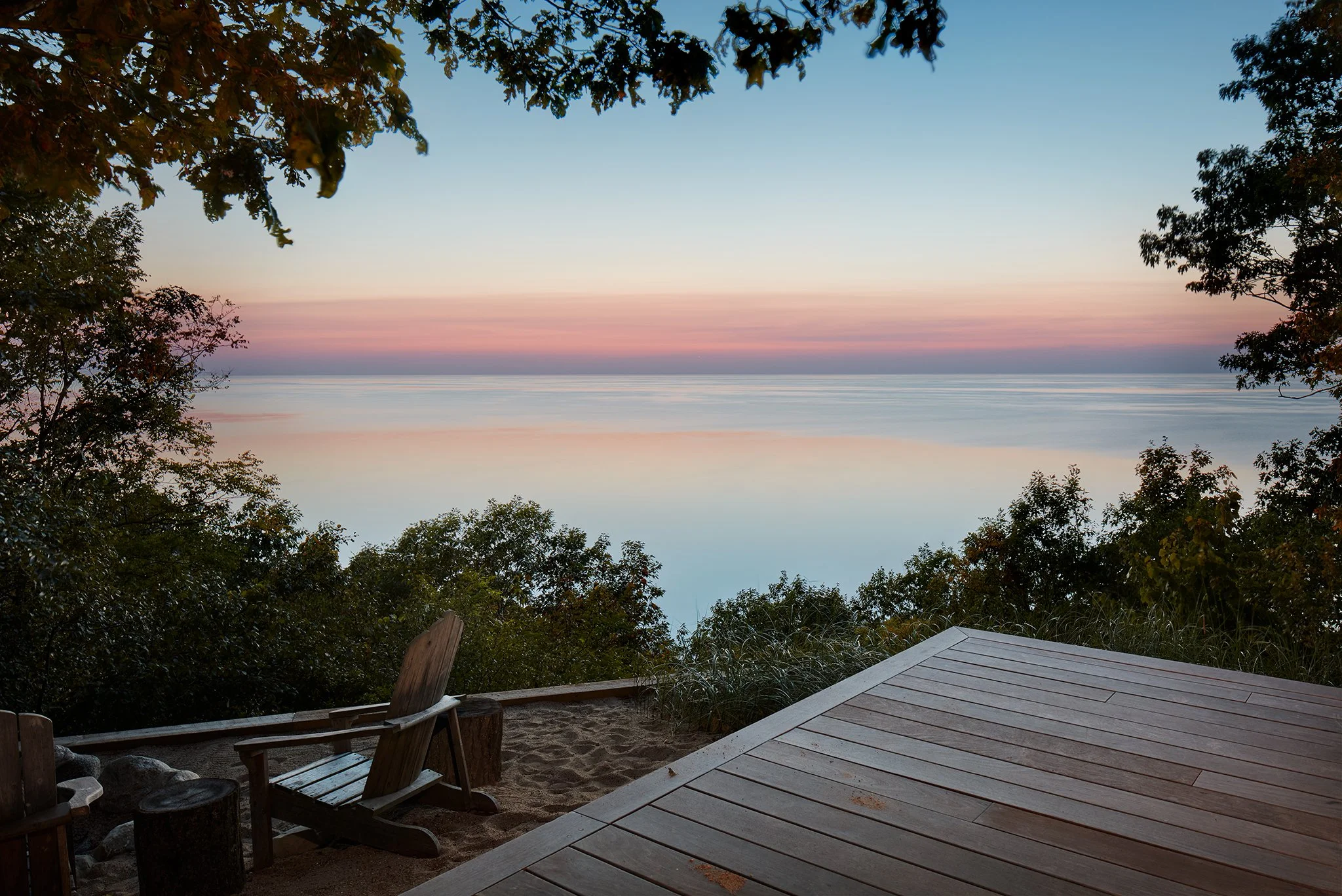
While this guide focuses on Lake Michigan’s Critical Dune Areas, similar shoreline and environmental requirements exist throughout the Great Lakes region. With project experience across Lakes Michigan, Huron, and Superior—and on inland lakes in several states—we can help clients understand and navigate the requirements specific to their property.

Property along Lake Michigan offers an extraordinary range of settings: expansive water views, wooded dunes, dramatic topography, and landscapes that transform with the seasons.
It can also be one of the more complicated places to build a home.
A beautiful wooded lot may fall within a regulated Critical Dune Area. Steep slopes, sandy soils, shoreline conditions, and environmental protections can influence where—and sometimes whether—a home can be built. Substantial infrastructure may be required simply to reach the building site.
These considerations aren't limited to waterfront properties. Michigan's protected dune systems extend inland, encompassing wooded properties where the lake may not be visible at all.
At Booth Hansen, we've designed homes in both environments. Our experience has taught us that the challenges of these properties are often inseparable from what makes them extraordinary places to live.
The key is understanding the land early enough to make informed decisions.
This guide outlines what to investigate before purchasing property, how site conditions influence design, and what to anticipate during permitting and construction.
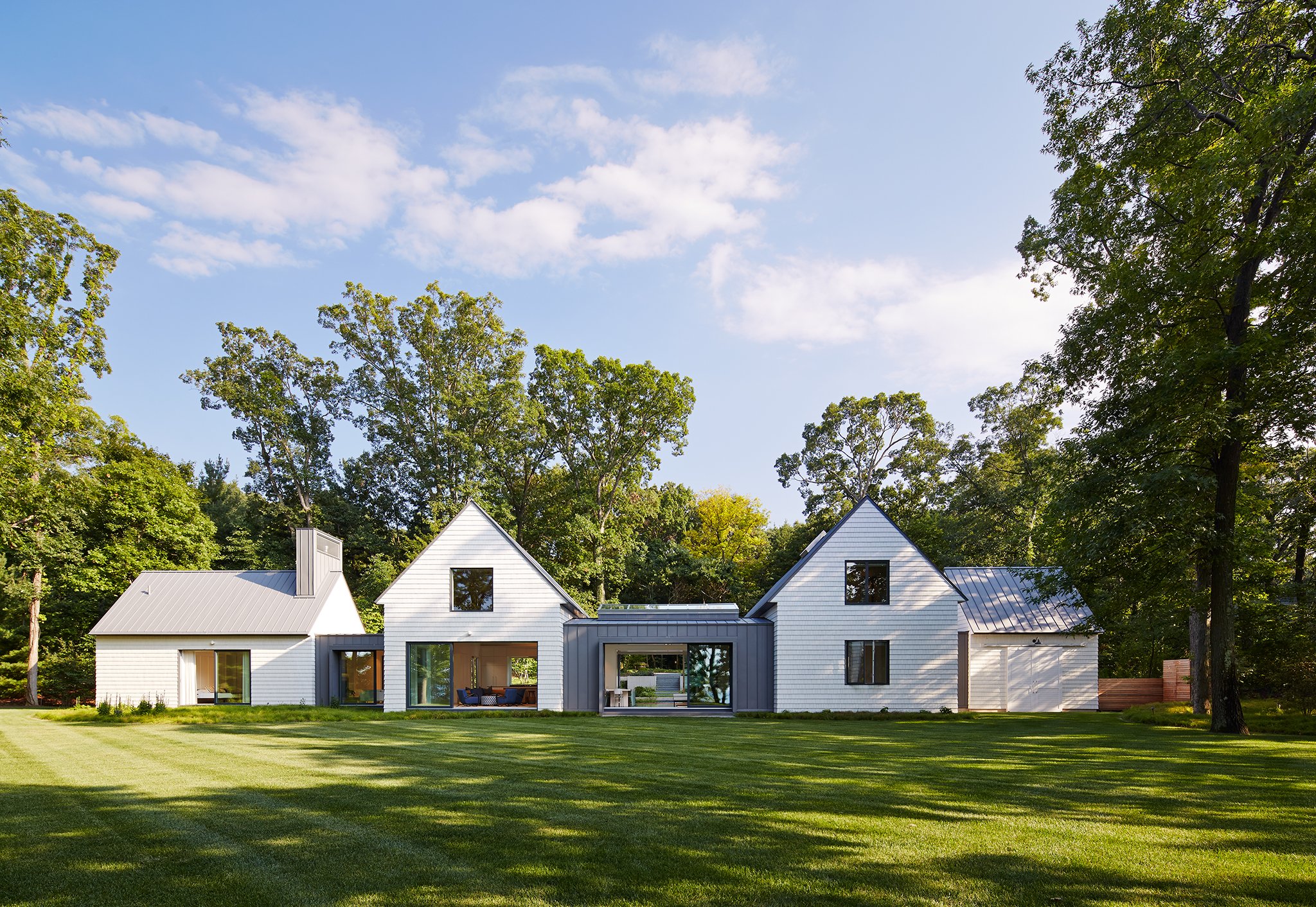
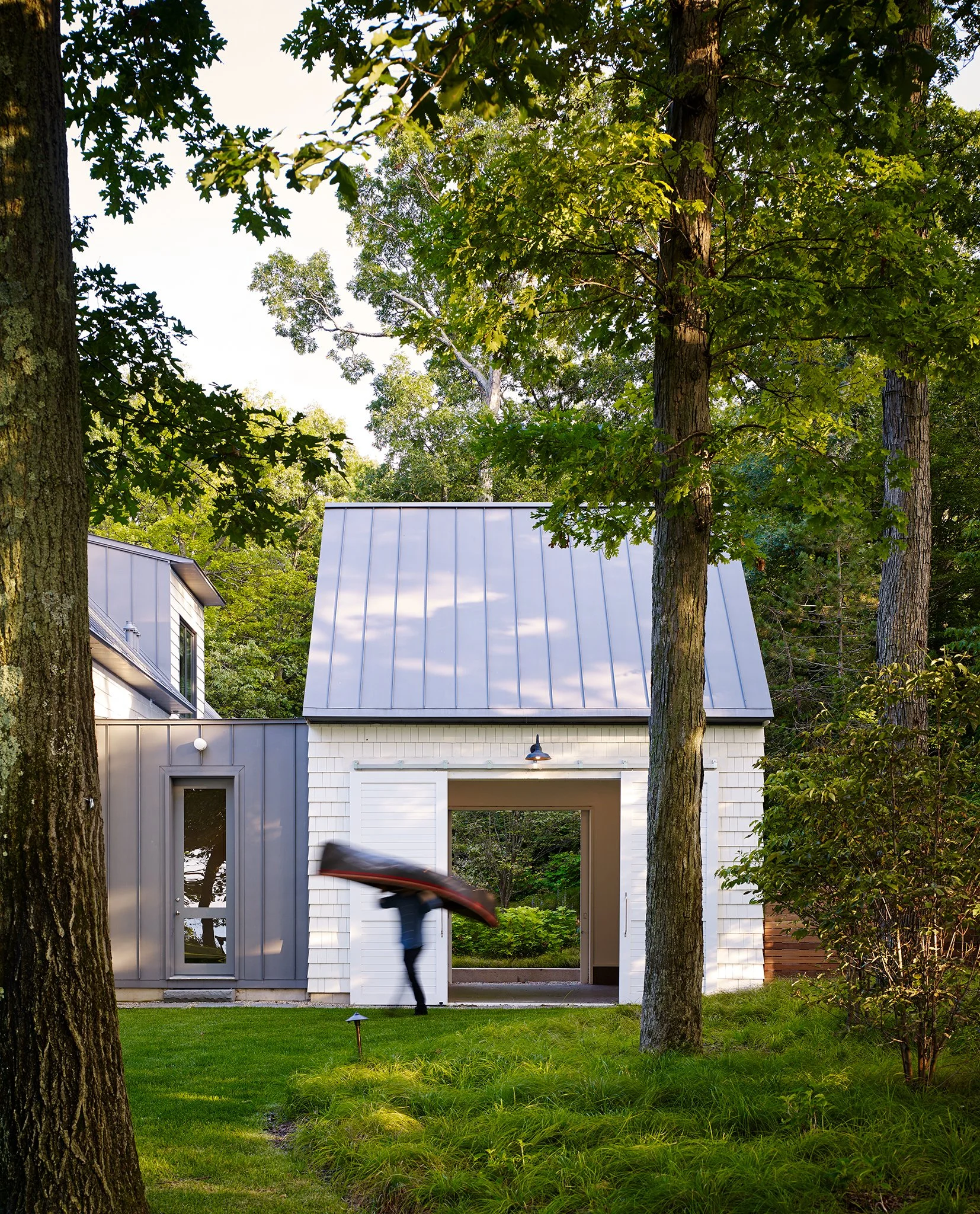

The Covert Dunes House illustrates the appeal of building within this remarkable landscape: an intimate residential setting that yields to the dunes and water.
Thinking About Building on Lake Michigan?
Start here.
Whether you’re actively searching for property or already own land, there are some of the considerations we recommend addressing early.
1. Investigate the property before you buy.
Two properties with similar purchase prices can have drastically different development costs. Steep terrain, difficult access, retaining structures, utilities, and specialized foundations can add substantial expenses before any square footage is built.
In our experience, particularly challenging waterfront properties can require several hundred thousand dollars in access and stabilization work alone. Actual costs depend on the property, scope, and construction conditions; this is not a typical project allowance.
2. Obtain a land survey.
A survey prepared by a licensed land surveyor can document boundaries, topography, easements, and existing improvements, depending on its scope. Potential building areas must then be evaluated against applicable regulations and site conditions.
Whenever possible, obtain and review this information before closing.
3. Check for Critical Dune Area Designation.
Michigan regulates construction and certain site activities within designated Critical Dune Areas. These areas extend beyond the immediate shoreline and can include inland properties.
Use EGLE’s mapping resources as an initial screening tool; see the interactive resource in Part I below.
If your property is not located in a Critical Dune Area (or you are building elsewhere on the Great Lakes), work with your team to identify any other environmental regulations that will impact your construction plans.
A short list: Minnesota DNR Shoreland Management Program, Wisconsin DNR Shoreland Management Program, Ontario Conservation Authorities Act.
4. Understand local development requirements.
Critical Dune regulations are only one layer. Local zoning, setbacks, building height limitations, shoreline protections, and other requirements can influence the location and size of a proposed home. Some municipalities or special conditions can add months to the review and approval process.
5. Evaluate access and utilities.
A driveway that looks simple on a property listing can become a substantial engineering project on or around a steep dune. Construction equipment, emergency vehicles, utilities, and potentially septic systems also need to be accommodated.
6. Involve an architect before closing.
An architect experienced with dune properties can help identify potential building locations, evaluate development constraints, and determine whether additional engineering or regulatory investigation is warranted.
7. Assemble the right team.
Depending on the property, this may include surveyors, structural and civil engineers, geotechnical consultants, landscape professionals, and environmental specialists.
8. Choose a contractor with relevant site experience.
Building an exceptional custom home and building one on a difficult dune site require overlapping but distinct expertise. Experience with a comparable terrain, access, and construction coordination matters.
I. What to Know Before You Buy
Is the Property in a Critical Dune Area?
One of the first questions to ask when considering property in Michigan’s designated dune landscapes along Lakes Michigan and Superior is whether any portion falls within a Critical Dune Area. Lake Huron and other Great Lakes properties may be subject to different shoreline and environmental requirements.
Michigan’s Critical Dune Areas are protected under Part 353 of the state’s Natural Resources and Environmental Protection Act. The regulations are intended to protect significant dune landscapes while accommodating permitted development.
A Critical Dune Area designation does not necessarily prohibit residential construction. It can, however, substantially constrain development or make a particular proposal infeasible, and may impact building placement, grading, vegetation removal, driveways, and other improvements.
Importantly, a property does not need to be directly on Lake Michigan to fall within a Critical Dune Area.
The designated areas follow the geography of the dune systems, sometimes extending well inland. Wooded properties without a lake view can therefore face many of the same regulatory considerations as waterfront sites.
For a prospective buyer, identifying the designation is an important first step - but it doesn’t establish what can ultimately be built.
That requires understanding the particular property and the proposed improvements.
Find your property using the interactive tool below. Select “Coastal Data” and then check “Critical Dune Areas” to see if your property falls within a Critical Dune Area.
Endorsements of Proven Performance“The data visualization tools clarified hidden trends and informed budget allocations with newfound confidence.”

Collective Excellence



-
We count on this visionary to define strategic priorities, allocate resources responsibly, and ensure every decision reinforces long-term value creation.
-
We trust this leader to synchronize production, logistics, and support functions, cultivating dependable processes that uphold our service commitments.
-
We depend on this engineer to transform conceptual requirements into robust technical solutions that integrate seamlessly with existing infrastructures.
Select the Knowledge Path That Aligns With Your Ambitions
Clarity Backed by Expertise-
We deliver advisory and implementation services in strategy, operations, marketing, and technology.
-
Engagements range from two weeks for focused audits to several months for comprehensive transformation.
-
Yes, we remain actively involved until solutions are fully operational and staff are confident.
-
Our adaptable methodology serves manufacturing, retail, professional services, and public sector entities.